
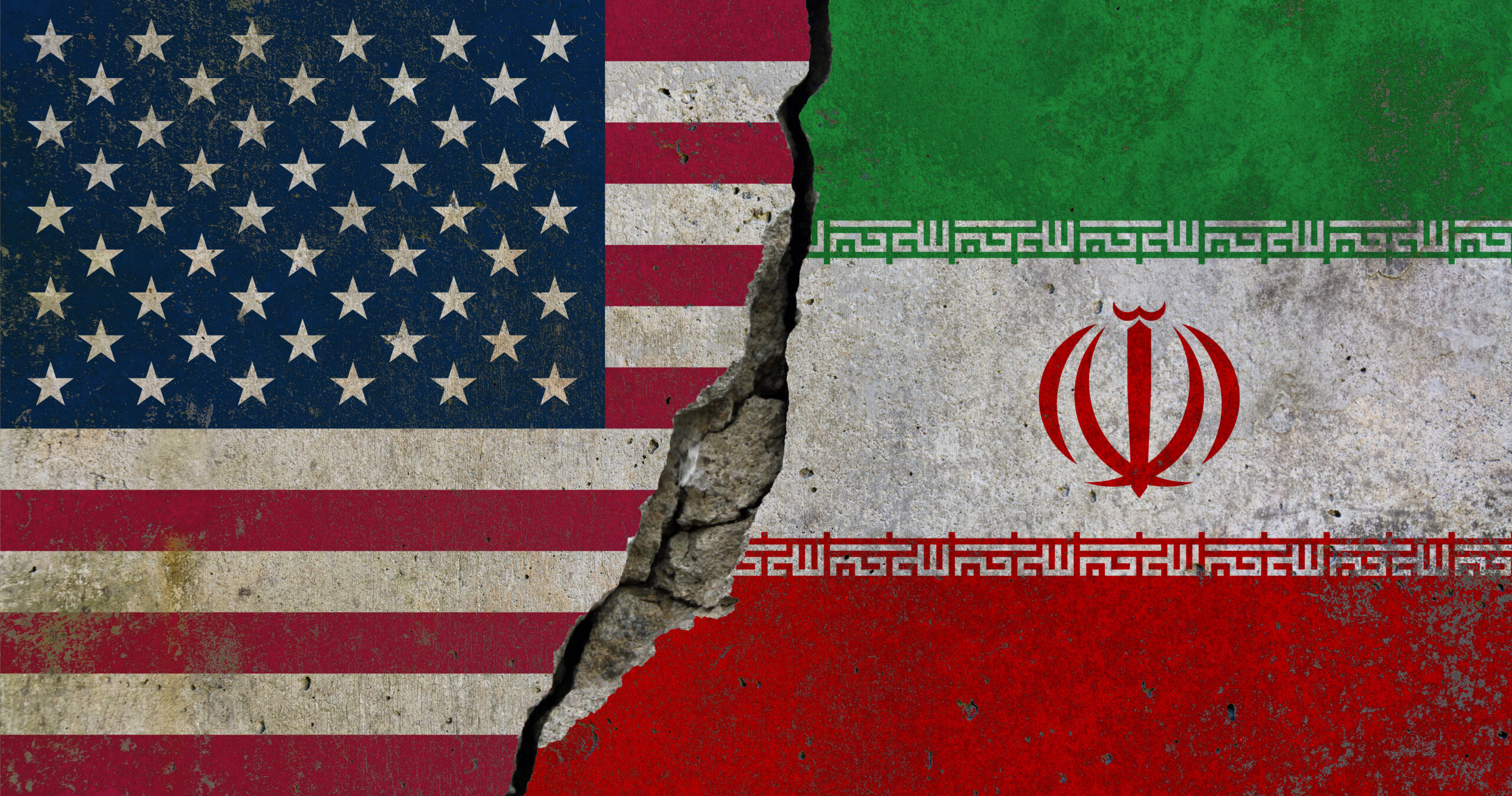
The Risk Landscape Has Changed: What the Iran Conflict Means for Your Organization’s Exposure
When Geopolitics Becomes a Business Disruption
In 2026, organizations including Stryker Corporation were reported to have experienced cyber incidents linked to Iranian-aligned threat actors, alongside confirmed targeting of U.S. water systems, healthcare providers, and industrial infrastructure – signaling a shift toward sector-wide disruption rather than isolated attacks. While attribution in these cases is often still being assessed, the pattern corresponds to a wider escalation in state-aligned cyber activity targeting U.S. businesses.
At the same time, threat intelligence reporting indicated that several high-profile U.S. organizations, particularly those with strong brand prominence or ties to critical infrastructure were being actively discussed as potential targets of physical attacks.
For many organizations, these signals feel like far-off geopolitical noise.
They are not.
They represent a fundamental change in how global conflict translates into direct, measurable business risk.
This Is Not Just Cyber—It’s Converged Threat
What’s emerging is not a single threat vector—it’s a coordinated, multi-domain approach.
Iranian-aligned groups such as CyberAv3ngers and state-linked actors like APT33 and APT34 have demonstrated a playbook that blends:
- Cyber intrusion and disruption
- Influence and disinformation campaigns
- Targeting of third-party suppliers
- Exploration of operational technology (OT) vulnerabilities
This is a converged threat model, where the objective is not just access, but impact.
Operational disruption. Reputation harm. Loss of trust.
Why Your Current Risk Assessment Is Already Outdated
Most enterprise risk frameworks are built on historical data:
- Previous incidents
- Known threat patterns
- Industry benchmarking
- Compliance requirements
But geopolitical escalation breaks that model.
Related: When War Breaks Out: What Businesses Should Be Doing to Prepare and Protect Their Operations
Three Structural Shifts Are Now in Play
1. Targeting Is No Longer Industry-Bound
Organizations are not being targeted solely on the basis of sector.
They are being targeted based on:
- Visibility
- Influence
- Perceived accordance with national interests
This dramatically expands the threat surface.
2. Intent Has Expanded Outside Financial Gain
Traditional cyber risk models focus on theft, ransomware, or espionage.
Now, motivations include:
- Political signaling
- Economic disturbance
- Mental impact
That changes both who is targeted and how attacks are executed.
3. Speed of Escalation Has Compressed
The time between geopolitical trigger and business impact is shrinking.
What once took weeks now unfolds in days.
This eliminates the effectiveness of reactive planning models.
From Risk Awareness to Risk Recalibration
Awareness is not the problem.
Execution is.
Most organizations recognize that geopolitical risk is increasing.
Very few have modified their programs to reflect it.
Step 1: Reassess Your Risk Profile Through a Geopolitical Lens
You need to answer:
- Are we a symbolic or high-visibility brand?
- Do we support or enable critical infrastructure?
- Are we embedded in sensitive supply chains?
- Could disruption to us create a downstream impact?
If the answer to any of these is yes, your exposure has likely increased.
Step 2: Map Exposure Across Converged Threat Vectors
Your exposure is no longer siloed.
Assess vulnerabilities across:
- Cyber and IT systems
- Operational technology (OT)
- Third-party and supply chain dependencies
- Facilities and personnel
- Brand and communications channels
The goal is to understand how a multi-vector attack scenario may unfold.
Step 3: Align Scenarios to Actual-World Threats
This is where most programs break down.
Organizations still continue to run generic scenarios:
“Ransomware attack”
“Supply chain disruption”
“Social media issue”
These are no longer sufficient.
Instead, scenarios must reflect layered, actual conditions, such as:
- A cyber disruption combined with coordinated misinformation
- A supplier compromise triggering operational and reputational fallout
- Simultaneous pressure on leadership, communications, and operations
This is the shift from discussion-based exercises to capability validation.
Preparedness Is Now a Competitive Advantage
Organizations that adapt will not just be more resilient—they will outperform.
Because during disruption:
- Customers move toward trusted operators.
- Regulators increase scrutiny
- Markets reward stability
- Reputation becomes a differentiator.
The ability to operate under pressure is now a strategic capability.
What Effective Preparedness Looks Like Now
Leading organizations are already evolving in three key ways:
1. Integrated Response Across Functions
Breaking down silos between:
- Cybersecurity
- Crisis management
- Communications
- Operations
Because threats are integrated, the response must be too.
2. Capability-Based Testing
Moving beyond tabletop exercises into:
- Instant decision-making
- Operational constraints
- Cross-functional coordination
- Measurable performance
The key shift:
From “What would you do?” to “Can you actually execute?”
3. Continuous Risk and Scenario Updates
Static annual reviews are no longer viable.
Organizations must:
- Continuously integrate threat intelligence.
- Update scenarios based on real-world events.
- Validate and refine reaction capabilities regularly.
The Bottom Line
The Iran conflict is not simply a geopolitical issue.
It is a risk multiplier for business.
It expands who is a target.
It accelerates how quickly disruption occurs.
And it exposes the limitations of established preparedness models.
Your Next Move
If your risk profile hasn’t been reassessed in the last 6–12 months, it is already outdated.
Now is the time to:
- Re-evaluate your exposure
- Align your scenarios to developing threats.
- Validate your team’s ability to operate under pressure.
Because the real question is no longer:
“Could this happen to us?”
It’s:
“Are we prepared when it does?”





Add your first comment to this post