
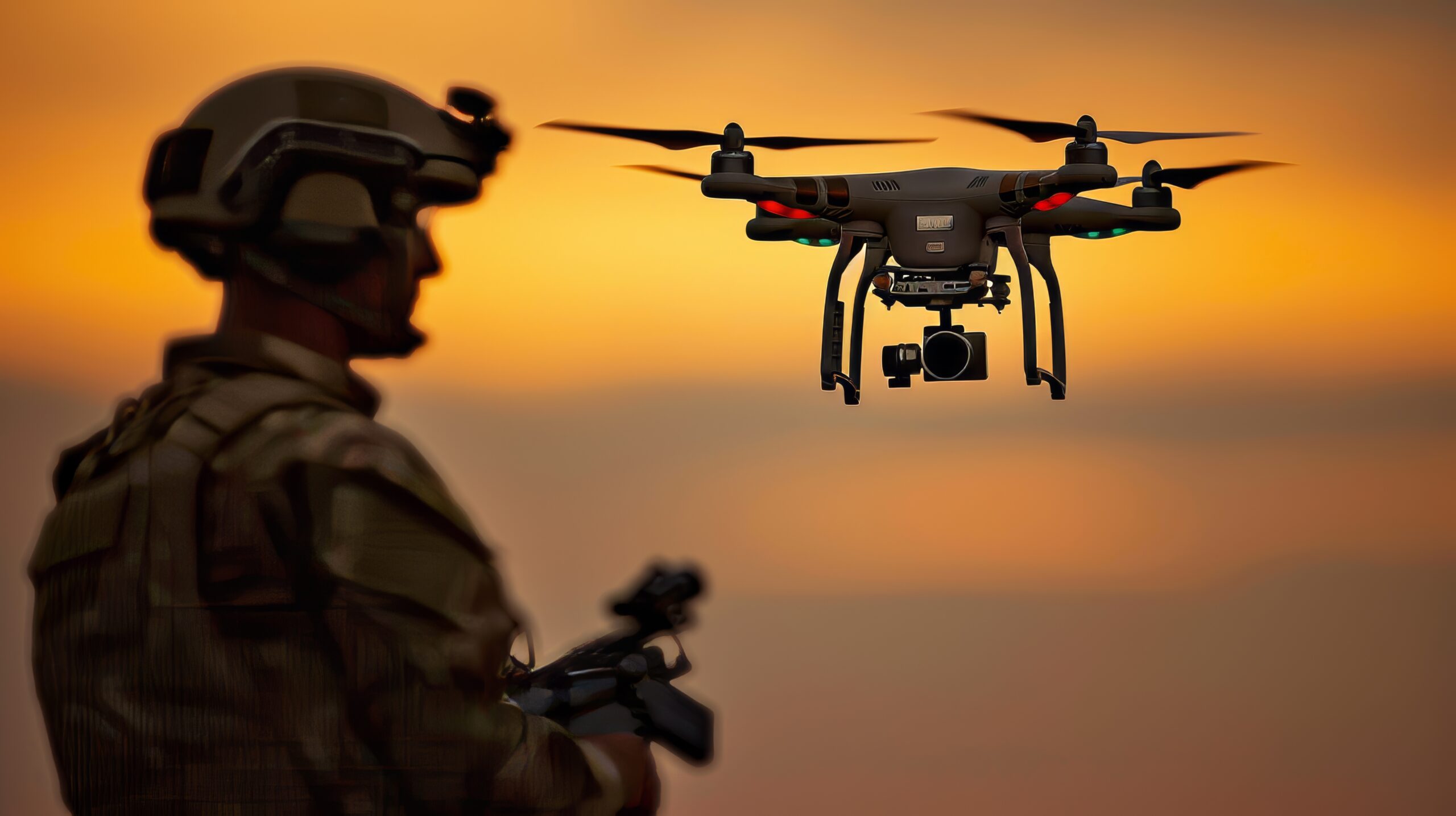
Flying Into the Fire: Why War-Driven Risks Are the New Reality for Drone Companies
A drone operator supporting infrastructure inspections overseas wakes up to find their systems locked. A message flashes across the screen—data exfiltrated, operations halted. The next day, a protest formed outside their regional office. Demonstrators accuse the company of enabling surveillance and military operations for a foreign adversary—activities they claim have been linked to violations of fundamental human rights, from unlawful monitoring of civilians to complicity in abuses against vulnerable populations.
Chants grow louder, not just about geopolitics, but about accountability: Who builds these systems? Who benefits from them? And who is harmed in the process?
By noon, clients and partners are calling. By evening, regulators are asking questions. Human rights organizations issue statements demanding transparency, due diligence, and adherence to international norms.
Nothing about technology failed.
Everything else did.
This is the new operating environment for drone companies. And whether you see yourselves as commercial, industrial, or purely civilian, the world may not make that distinction for you.
This isn’t hypothetical. It’s already happening:
- A cyberattack linked to Ukrainian hacktivists reportedly breached Gaskar Group, stealing sensitive UAV data and wiping tens of terabytes of internal systems.
- A China-linked threat group conducted supply chain attacks on drone-related companies in Taiwan and South Korea, targeting vendors rather than the operators themselves.
- Intelligence agencies from the U.S. and U.K. intercepted live feeds from Israeli military drones during Operation Anarchist, exposing vulnerabilities in UAV systems.
- Internal backlash erupted at Axon when its ethics board resigned over plans to deploy weaponized drones, citing civil liberties and human rights concerns.
- Facilities linked to Elbit Systems have been targeted by activists amid ongoing criticism of the company’s role in surveillance and military operations.
The Expanding Threat Landscape: War Isn’t “Over There” Anymore
Over the past few years, geopolitical conflict has blurred the lines between military and commercial drone use. What was once a niche defense application is now a dual-use reality—where the same technology can inspect pipelines one day and be repurposed for surveillance or combat the next.
That shift brings new risks.
According to IBM’s 2024 Cost of a Data Breach Report, the average breach now costs $4.45 million globally, with critical infrastructure and technology sectors among the most targeted. At the same time, cybersecurity agencies like CISA and ENISA have warned of a sustained rise in state-sponsored cyber activity targeting private sector organizations—especially those connected to emerging technologies.
Drone companies are firmly in that category.
And it’s not just cyber threats.
Organizations perceived—rightly or wrongly—as linked to defense, surveillance, or government contracts are increasingly facing:
- Foreign threat actors are attempting to disrupt operations or steal sensitive data.
- Activist groups target facilities, employees, or public reputation.
- Supply chain vulnerabilities are tied to geopolitically sensitive regions.
In other words, your risk profile may be evolving faster than your business model.
“Are We Really a Target?”: The Questions Leaders Are Asking
Let’s look at some questions you should consider.
1. We’re not a defense contractor, why would anyone target us?
Intent doesn’t always matter. Perception does.
If your drones, software, or data could be used in a conflict context, that alone may put you on someone’s radar. Threat actors often look for the path of least resistance—and smaller or mid-sized companies can be easier targets than large, hardened defense firms.
2. Is this really a physical risk, or just cyber?
It’s both—and increasingly interconnected.
We’re seeing a convergence where cyber incidents trigger real-world consequences, and physical protests are amplified through digital channels. Offices, warehouses, and even field operations can become focal points for disruption.
3. How do we prepare for something this unpredictable?
You don’t prepare for every scenario—you prepare your organization to respond to any scenario.
That’s the essence of operational resilience. It’s less about predicting the exact threat and more about building the capacity to absorb shocks, adapt, and recover quickly.
4. Won’t acknowledging these risks create unnecessary alarm?
Ignoring them creates far greater risk.
Stakeholders—clients, regulators, partners—are already thinking about these issues. Demonstrating awareness and preparedness builds confidence. Staying silent doesn’t.
When War-Driven Risks Hit Home: Two Scenarios
Let’s make this real.
Scenario 1: Targeted and Unprepared
A commercial drone company with international clients becomes the target of a coordinated cyberattack linked to a foreign threat group.
Their systems are breached through a third-party vendor. Sensitive flight data is accessed. At the same time, an activist group, having seen reports of the breach, launches a campaign accusing the company of unethical practices.
What happens next?
- The company delays public acknowledgment, hoping to contain the issue.
- Internal teams operate in silos—legal, IT, and communications aren’t aligned.
- Employees receive no guidance as protests begin near headquarters.
Within days:
- Clients suspend operations
- Media narratives spiral
- Regulators step in
The organization isn’t just dealing with a cyber incident—it’s facing a full-scale crisis across cyber, physical, and reputational fronts.
Scenario 2: Anticipating the Reality
Now consider a company that has accepted war-driven risks as part of its operating environment.
They’ve identified foreign cyber threats and activist actions as credible scenarios. They’ve planned accordingly.
When a similar cyber incident occurs:
- A predefined crisis team activates immediately.
- Cyber, legal, and communications teams work from a shared playbook.
- Employees receive clear instructions, including safety guidance for potential protests.
Simultaneously:
- The company issues a transparent statement acknowledging the issue.
- Clients are briefed directly with known facts and next steps.
- Physical security measures are heightened at key locations.
They don’t control the situation—but they control their response.
And that makes all the difference.
Building Resilience in a Conflict-Influenced World
So how do you operationalize resilience in this context?
Let’s focus on four areas that matter most.
1. Expand Your Risk Lens
If your risk register doesn’t include geopolitical and conflict-driven scenarios, it’s outdated.
Consider:
- State-sponsored cyberattacks
- Disinformation campaigns
- Activist disruptions
- Sanctions or export restrictions
You don’t need perfect intelligence—you need informed assumptions.
2. Integrate Cyber and Physical Security
These can’t operate in separate silos anymore.
A cyber breach can expose employee locations. A protest can be organized in hours through online platforms. Your response needs to be coordinated across both domains.
That means shared communication channels, joint exercises, and aligned leadership.
3. Prepare for Scrutiny—Not Just Disruption
In today’s environment, how you’re perceived matters as much as what actually happens.
Develop clear messaging around:
- How your technology is used
- Your ethical guidelines
- Your compliance with regulations
When a crisis hits, you won’t have time to craft this from scratch.
4. Strengthen Your People Readiness
Your employees are on the front lines—whether they realize it or not.
They need to know:
- How to report suspicious activity
- What to do if approached by media or activists
- How to stay safe during physical disruptions
Resilience isn’t just a leadership function. It’s an organizational capability.
Related: When the Machine Thinks for Itself: Preparing Executives for Rogue AI Crises
Quick Wins: What You Can Do This Quarter
If this feels like a lot, start small—but start now.
- Add one geopolitical risk scenario (cyber or physical) to your next exercise.
- Review your third-party vendors for potential exposure to foreign threats.
- Create a basic employee guidance sheet for protests or public scrutiny.
- Align your cyber and communications teams on incident response protocols.
- Draft a holding statement addressing potential misuse of your technology.
These steps won’t eliminate risk—but they will put you in a far stronger position.
Final Thought: You Don’t Get to Choose the Environment—Only Your Readiness
Here’s the reality: drone companies are operating in a world where technology, politics, and conflict are increasingly intertwined.
You may not see yourselves as part of that equation. But others might.
And in a crisis, their perception becomes your problem.
Operational resilience isn’t about preparing for the world you wish you were in—it’s about preparing for the one you’re actually operating in.
If this shift in perspective resonates, it may be time to take a closer look at your organization’s readiness. Whether that’s pressure-testing your plans or exploring how to address these evolving risks, PreparedEx can help guide the conversation.
No pressure. Just a practical next step toward being ready for what’s already here.





Add your first comment to this post